
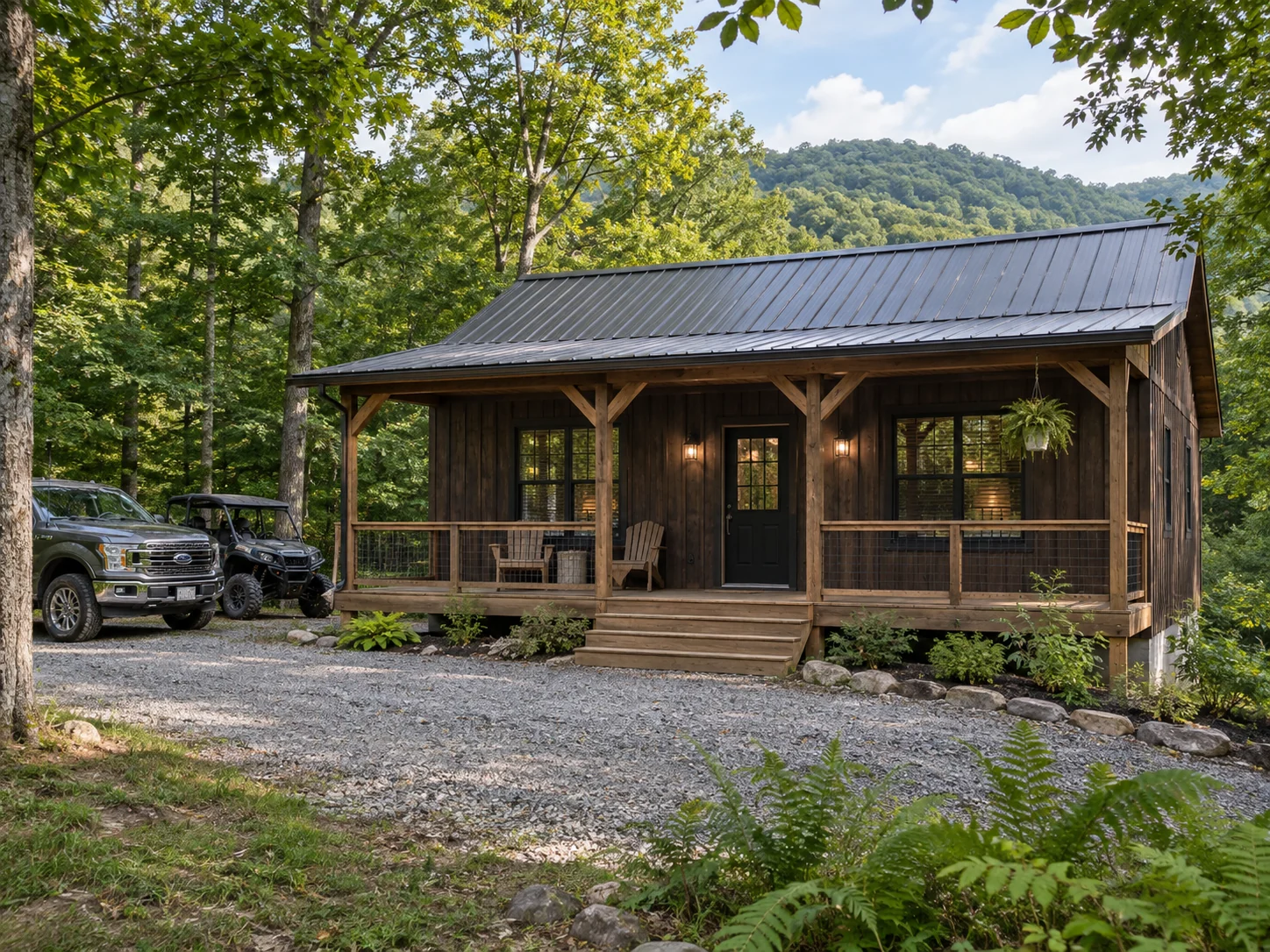
1. Make arrival understandable
Look at how a first-time guest finds the entrance, stops, and unloads. A clear arrival route helps the rest of the property work. Note any construction issues at gates, entrances, or walkways and bring photos to the first review. Signs and guest instructions can help with operations, but they do not replace a workable physical layout.
2. Review truck and trailer maneuvering
Consider the largest vehicle combination you expect to host. Show where it can park and how it leaves when the rental is full. Discuss driveway grades, approach, and turning space together. An enlarged parking area may not solve an awkward entrance, so start with the entire movement through the property.
3. Create a practical gear entrance
A covered landing, bench, storage, and suitable floor transition can give muddy boots and wet coats a place to stop. Discuss the guest count and existing layout before deciding what fits. A small, organized entrance can be more useful than scattering storage through the living space.
4. Revisit bathroom bottlenecks
Walk through the rental at full occupancy and identify where bathroom use becomes difficult. Counter space, towel storage, door swings, and fixture placement all matter. Ask whether a focused remodel could address the main issue or whether a larger layout change needs review.
5. Give the kitchen usable work space
Guests bringing food for several days need storage and preparation space as well as appliances. Look at the refrigerator, sink, counters, and dining area together. Bring the housekeeping routine into the discussion so new cabinets or finishes support both guest use and turnover.
6. Separate maintenance supplies from guest storage
An owner’s closet or dedicated storage building can keep tools and supplies from consuming guest space. List what needs to be stored and who should use each area. The construction solution should fit that list rather than creating a room without a clear purpose.
7. Give outdoor gathering a defined place
Plan a deck, porch, or seating area around the guest count and the route to the cabin. Avoid letting trailer parking become the only outdoor gathering space. Discuss structural connections and the existing building before choosing the size of a covered addition.
8. Investigate recurring water problems
Show the team wet areas, washed-out gravel, or water near an entrance. Discuss the cause and the proposed work before adding surfaces or covering damaged areas. Site conditions may need further review; a cosmetic refresh should not hide the issue that made the area difficult to maintain.
9. Verify the route before advertising trail access
Know whether guests trailer to a trailhead or use an authorized riding route. A property’s proximity to a trail does not create permission to connect to it. Confirm current route information with the operator and relevant owners before making ride-out access part of the rental description.
10. Put the work in a sensible order
Prioritize underlying repairs and site issues, then coordinate interior and outdoor improvements around a defined scope. Share your rental calendar and budget range when requesting a review. The team can discuss construction fit and sequencing; confirm the plan before promising guests new features or a reopening date.
Plan the whole property
Explore Cabins & ATV Tourism ConstructionCheck official trail information
Use the trail operator’s current maps and rules when reviewing a possible guest riding route.
Hatfield-McCoy Trail Maps & DescriptionsHatfield-McCoy Trail Rules