
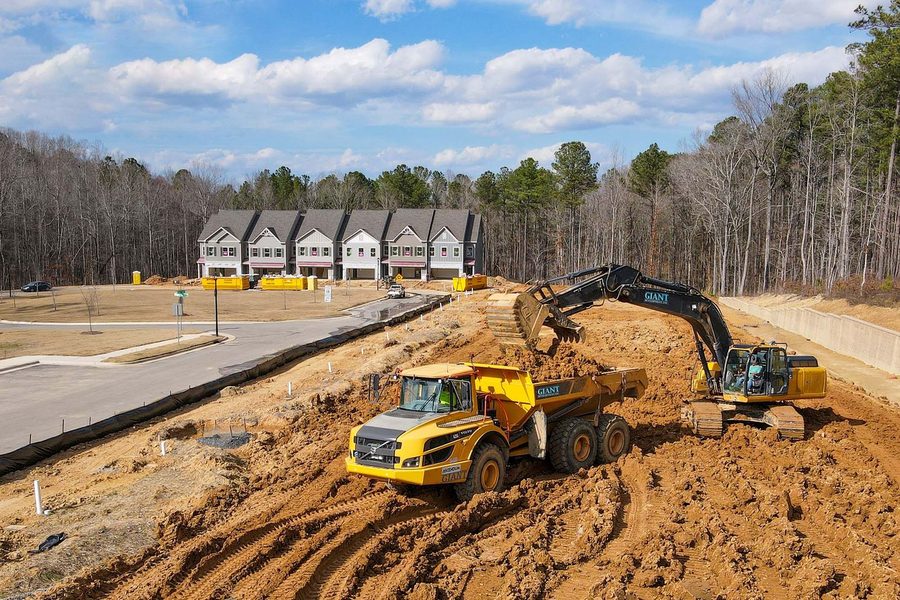
Lay out circulation before individual sites
Consider how a tow vehicle and trailer would enter, reach a site, turn, and leave. Guest vehicles, service deliveries, and maintenance equipment may need different paths. Share the sizes and types of rigs you expect and whether sites would be back-in or pull-through. The property layout should be reviewed as a whole before clearing separate pockets that may not connect well.
Discuss grading and drainage together
A campsite surface needs to be considered with surrounding grades and the movement of water. Low spots, runoff paths, and slopes can influence where work belongs. Walk through known wet areas and explain what happens after heavy rain. Site-specific review is needed to determine the work; adding gravel alone should not be treated as a complete solution to an unresolved drainage problem.
Coordinate site work with utility planning
Identify where proposed water, electrical, and wastewater infrastructure would need to go before grading or surfacing the property. Ask which plans, approvals, and specialist services are required and who is responsible for each. A site-work discussion is not a promise of a turnkey permitted campground or installed hookups. Confirm the complete scope before construction responsibilities are assigned.
Separate guest areas from service functions
Include room for check-in, maintenance access, refuse collection, and any buildings you are considering. ATV guests may also need space for machines and trailers beyond the RV itself. Discuss the relationship between these uses, existing structures, and neighboring property. Preserving a usable layout can matter more than squeezing in an additional site at the planning stage.
Phase expansion around the existing property
If the campground is already operating, explain which areas must remain available and where equipment could enter. A phased scope can help organize decisions, but the sequence needs to reflect the actual site and approved plan. Bring photos, a drawing, and the intended number of sites to the first conversation so Gary can discuss service fit and the information needed next.